
How to Teach the Elements of Poetry in Upper Elementary
Teaching poetry doesn’t have to mean spending weeks analyzing complicated poems or asking students, “But what do you think the poet really meant?”
For upper elementary students, I like to start much simpler: give students the vocabulary they need to notice and talk about poetry.
Teaching the elements of poetry gives students a framework for understanding what makes a poem different from other types of writing. Once students understand things like stanzas, rhyme, rhythm, repetition, figurative language, and sensory language, they have something concrete to look for when they read a poem.
And honestly? It makes poetry discussions a whole lot easier for everyone.
Start With an Elements of Poetry Anchor Chart
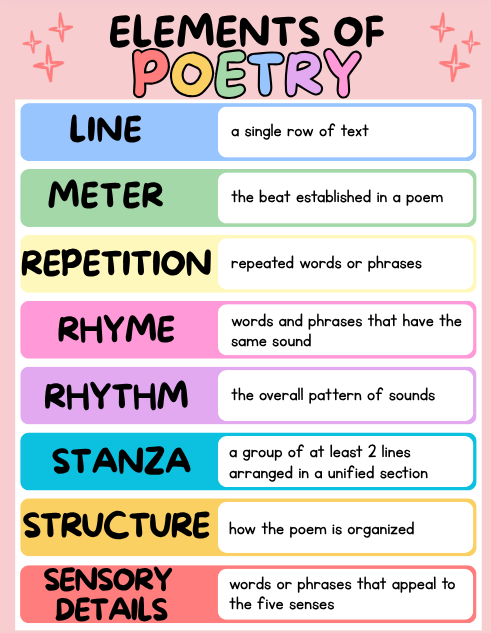
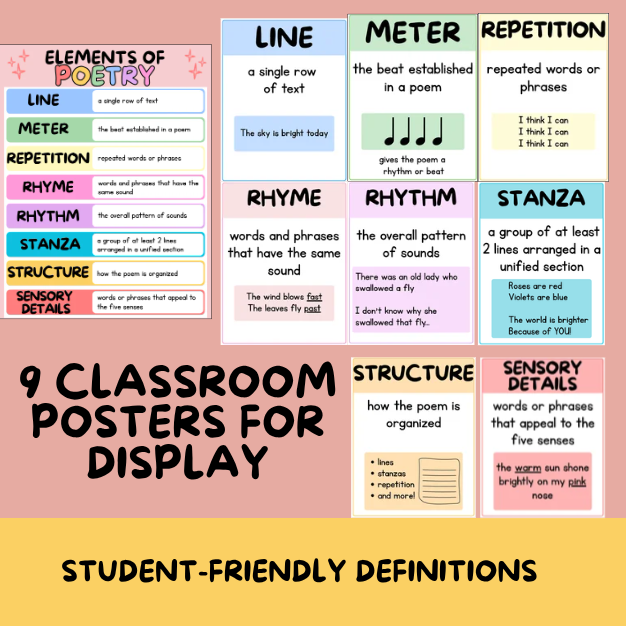
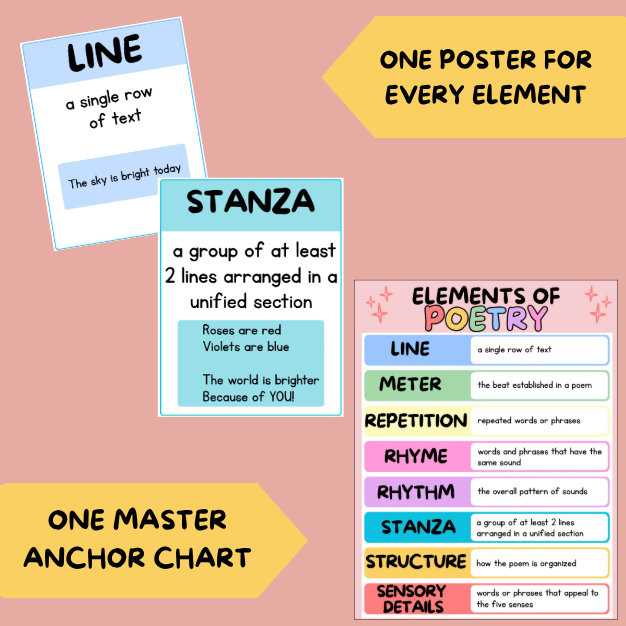
When I introduce poetry, I like having one simple elements of poetry anchor chart that students can refer back to throughout the unit.
Instead of trying to teach every element in depth on the first day, introduce the vocabulary and give students a quick overview of what each term means.
Your anchor chart might include elements such as:
Line: one line of a poem
Stanza: a group of lines in a poem
Rhyme: words that have the same or similar ending sounds
Rhythm: the beat or flow of a poem
Repetition: words, phrases, or sounds that are repeated
Sensory Details: words and phrases that help readers imagine what they might see, hear, smell, taste, or feel
Depending on your class and what you are studying you might also want to include Figurative Language or Theme.
Students don't need to master all of these immediately.
At first, I just want them to start thinking:
“Oh! These are the things I can look for when I read poetry.”
That gives us a common language to use throughout the rest of our poetry work.
Teach the Elements of Poetry One at a Time
Once students have seen the big picture, you can start focusing on individual elements.
This is where individual elements of poetry posters can be really helpful. Instead of constantly referring students to one giant chart, you can spotlight the element you're currently working on.
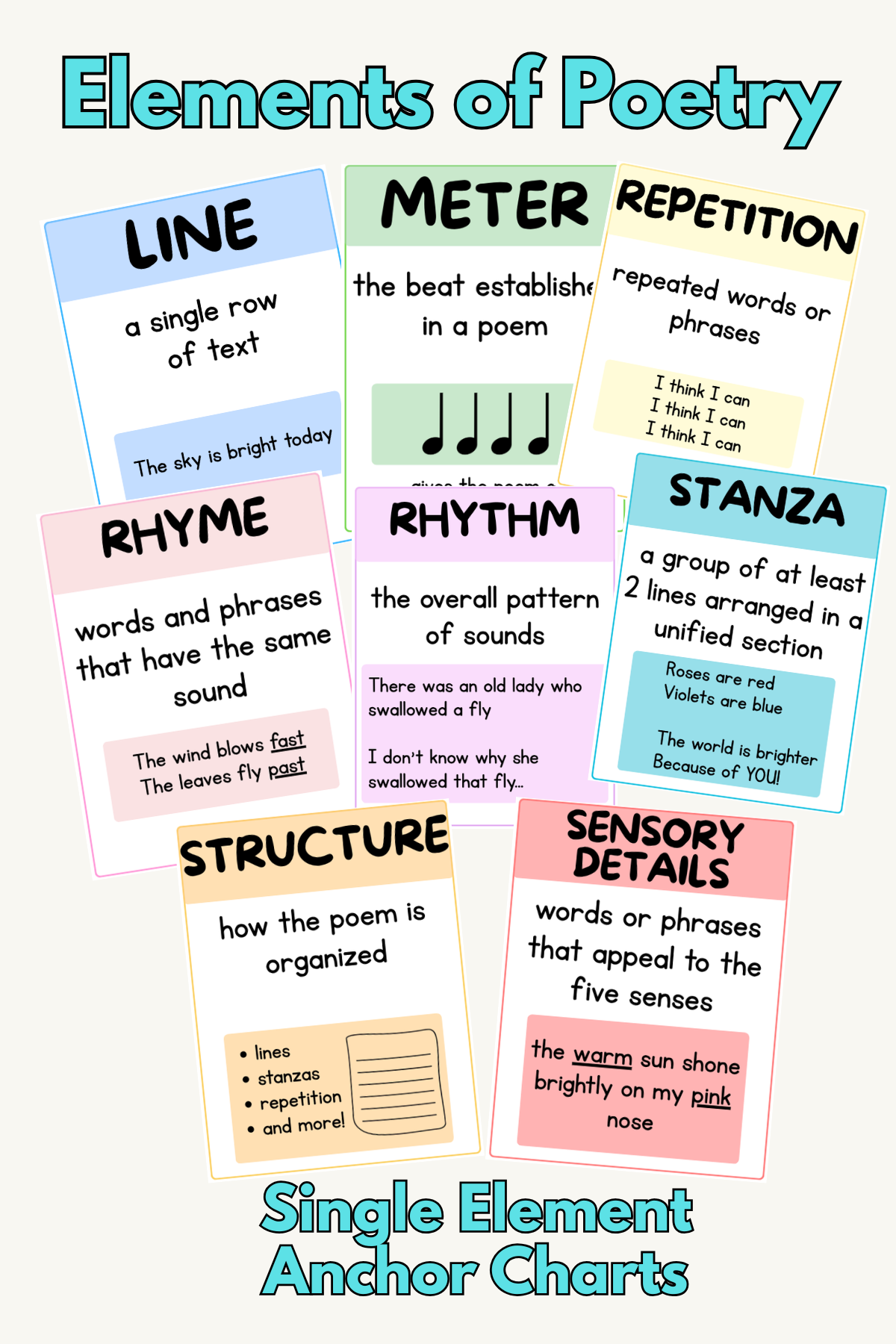
For example, if you're focusing on repetition, display the repetition poster and read a short poem together.
Then ask:
What do you notice the poet repeating?
Follow that with:
Why do you think the poet chose to repeat it?
This takes students beyond simply identifying an element and starts moving them toward understanding what that element does for the poem.
That distinction is important.
I don't just want my students to be able to circle two rhyming words and call it a day. Eventually, I want them thinking about how an author's choices affect the way a poem sounds, feels, or communicates an idea.
You can grab the anchor charts here »
Give Students an Elements of Poetry Reference Sheet
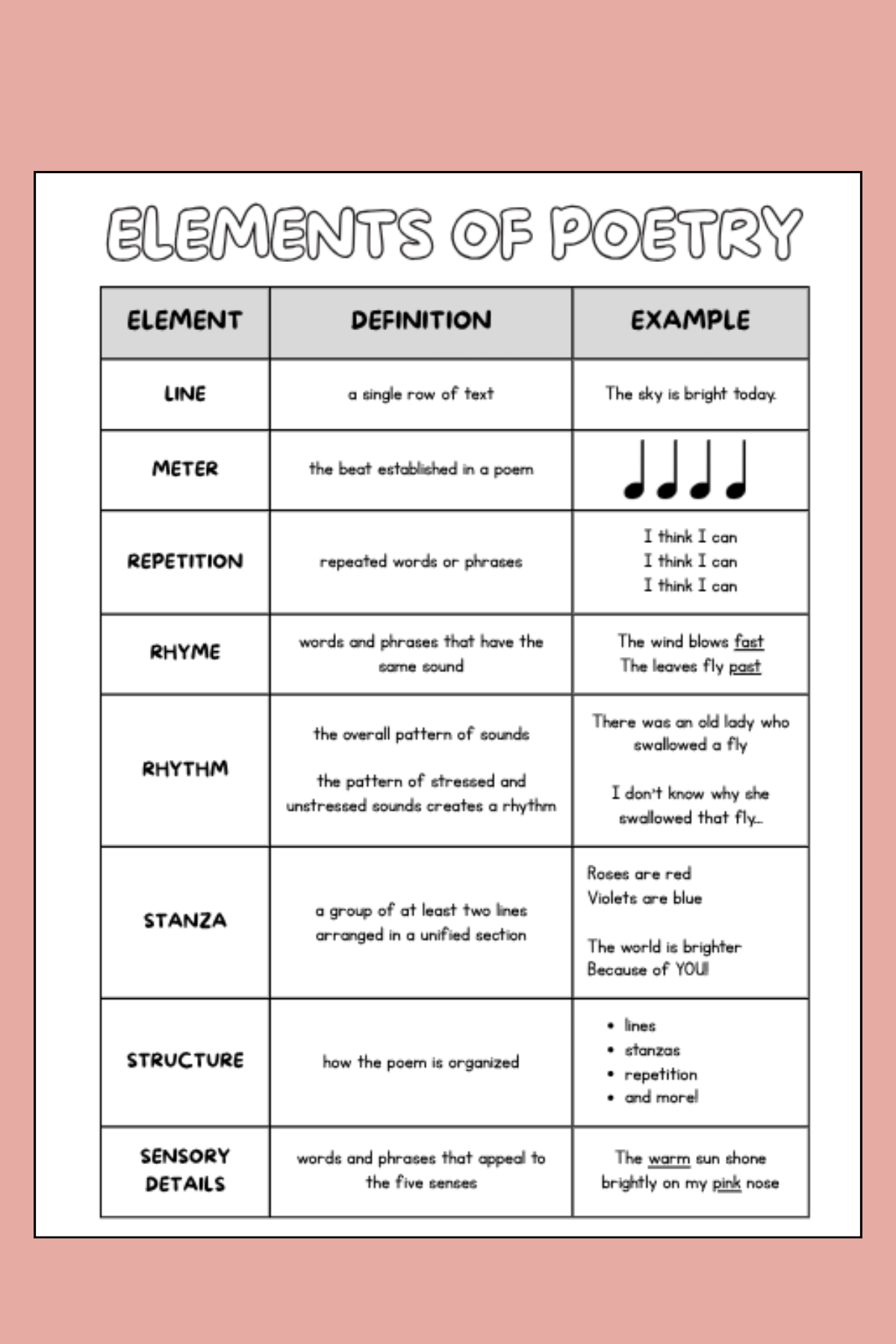
A classroom anchor chart is helpful…until your students aren't actually looking at it. 😂
That's why I also like giving students their own elements of poetry chart or reference sheet to keep in their reading folder, binder, or notebook.
This gives them a reference they can actually have beside them while they're reading.
When a student asks:
"Wait…what's a stanza again?"
Instead of immediately giving them the answer, you can point them back to their reference sheet.
It's a tiny classroom system, but it helps students become a little more independent while they're working.
And I'm always here for anything that cuts down on answering the exact same question 14 times.
Practice Finding Elements in Real Poems
Once students understand the basic vocabulary, it's time to actually use it.
Choose a poem you're already reading as a class and have students look for evidence of different poetry elements.
You could ask:
What elements of poetry do you notice?
How is this poem organized?
Are there any words or phrases that repeat?
Does the poet use rhyme?
What sensory details do you notice?
How does the rhythm affect the way the poem sounds?
Why might the poet have chosen to use this particular element?
And you don't have to analyze every element in every poem.
Sometimes I might only ask students to find one.
That can be as simple as:
Find one element of poetry in today's poem. Write the element, copy an example from the poem, and explain what you noticed.
That's it.
Simple and actually doable.
Easy Elements of Poetry Activities
Once students know the vocabulary, you can work poetry practice into things you're already doing rather than creating an entirely separate poetry lesson every day.
Here are a few easy elements of poetry activities that work especially well in 3rd, 4th, and 5th grade classrooms.
Poetry Scavenger Hunt
Give students a poem and ask them to find three different elements.
You can make this more challenging by asking students to provide evidence for each one.
For example:
Element: Repetition
Evidence: “I can…” appears at the beginning of several lines.
This works especially well with partners because students naturally start discussing what counts as evidence.
Element of the Day
Choose one poetry element to focus on during your read-aloud or poetry lesson.
Students only have to look for that one thing.
It's quick, focused, and especially helpful when students are first learning the vocabulary.
Poetry Detective
Give students a short poem and let them become "poetry detectives."
Their job is to annotate the poem and label any elements they can find.
You could even let them use different symbols:
R = rhyme
REP = repetition
FL = figurative language
SD = sensory Details
No elaborate prep required.
Write Your Own Example
After identifying an element in someone else's poem, have students create their own example.
If you're studying sensory language, for example, students could write one line that helps a reader picture a thunderstorm.
If you're studying repetition, challenge them to write three lines that intentionally repeat the same phrase.
This helps students understand that elements of poetry aren't just things teachers invented for them to identify on a worksheet. They're choices poets actually make when writing.
Use an Elements of Poetry Worksheet for Independent Practice
Whole-group practice is important, but eventually I want to know whether students can identify these elements independently.
That's where an elements of poetry worksheet or reading response can come in.
It doesn't need to be complicated.
Students can read a poem, identify an element they notice, provide evidence, and explain their thinking.
You can use this type of activity for:
Independent reading
Morning work
Reading centers
Small groups
Poetry units
Homework
Sub plans
Early finisher work
It also gives you a quick way to see who understands the vocabulary and who might need a little more support.
Keep Your Elements of Poetry Resources Simple
One of my biggest goals when teaching poetry is to keep the visual supports simple enough that students will actually use them.
An anchor chart doesn't need 47 illustrations and twelve different fonts.
Students need to be able to glance at it and quickly figure out:
What does this word mean?
That's why I created my Elements of Poetry Posters & Student Reference Sheets with simple definitions and clean visuals that can stay up throughout your poetry unit.
The resource includes a complete elements of poetry anchor chart, individual elements of poetry posters, and a student reference sheet students can keep nearby while they're reading and writing poetry.
Teaching Elements of Poetry Doesn't Have to Be Complicated
Students don't need to memorize every poetry term after one lesson.
Start with an anchor chart.
Introduce the elements.
Focus on them one at a time.
Then give students lots of opportunities to notice those elements in the poems they're already reading.
Over time, the vocabulary starts to stick—and more importantly, students begin using it to actually talk about what they're reading.
That's the goal.
Not memorizing a definition for a test.
Actually noticing what poets do with words.
Ready to Teach the Elements of Poetry?
If you're getting ready to teach poetry in your 3rd, 4th, or 5th grade classroom, I've already put together the visual supports for you.
My Elements of Poetry Posters & Student Reference Sheets give you an anchor chart for whole-group instruction, individual posters for teaching each element, and student reference sheets they can use independently.
Print them, introduce them, and keep them accessible throughout your poetry unit.
Happy Writing!
Xoxo, Alexa
