How To Create Simple Classroom Systems That Actually Stick
If classroom management feels harder than it should… you’re not doing anything wrong.
Most teachers don’t struggle because they’re bad at managing a classroom. They struggle because they were never taught how to build simple classroom systems that run the day without constant reminders, corrections, or burnout.
The good news?
You don’t need more rules, charts, or complicated behavior plans.
You need a few strong systems that actually stick.
Let’s break down what classroom systems really are, why they matter, and how to create ones that work without adding more to your plate.
This post is all about classroom systems and routine ideas for teachers to have a calmer and easier day.
This site contains affiliate links, view the disclosure for more information.
What Are Classroom Systems?
Classroom systems are repeatable routines and procedures that tell students:
what to do
when to do it
and how to do it - without asking you every time
They are not:
reward charts that need constant updating
long lists of rules students forget
trendy behavior strategies that only work for a week
Think of classroom systems as the invisible structure holding your day together.
Classroom Systems vs. Classroom Rules (This Is the Shift)
Rules tell students what not to do.
Systems teach students what to do.
For example:
A rule says: “Don’t interrupt.”
A system says: “Here’s what to do if you need help while I’m teaching.”
When teachers rely on rules alone, they end up repeating themselves all day.
When systems are in place, students know the expectations — and follow them.
Why Classroom Systems Fail (And It’s Not Your Fault)
Most classroom systems fail for one of three reasons:
Too Many Systems at Once
Trying to systematize everything leads to overwhelm for you and your students.
2. Systems That Depend on the Teacher
If a system only works when you’re actively managing it, it’s not a system - it’s extra work.
3. Inconsistent Follow-Through
Students don’t need perfection, but they do need consistency.
The solution? Start small and focus on the systems that impact behavior the most.
The 5 Core Classroom Systems Every Teacher Needs
If you only set up a few systems, start here:
1. Arrival & Morning Work System
Students should know exactly what to do the moment they walk in — no questions, no wandering.
2. Transitions System
How students move between activities affects the entire tone of your day.
3. Help & Interruption System
This one alone can drastically reduce classroom disruptions.
4. Independent Work / Fast Finisher System
Students need meaningful options when they finish early, not busywork.
5. End-of-Day Dismissal System
A calm dismissal starts with predictable steps, not last-minute chaos.
These systems don’t need to be complicated - they just need to be clear.
How Classroom Systems Improve Classroom Management
When systems are in place:
students feel secure
expectations are predictable
behavior issues decrease naturally
You’ll notice:
fewer interruptions
smoother transitions
more student independence
more time to actually teach
This is classroom management that works with students, not against them.
How to Start Building Classroom Systems (Without Overhauling Everything)
Start with:
one routine
one system
one clear expectation
Teach it explicitly.
Practice it.
Stick with it.
Once that system becomes automatic, move on to the next.
This is how sustainable classroom management is built. Not all at once, but intentionally.
A Simple Way to Get Started Today
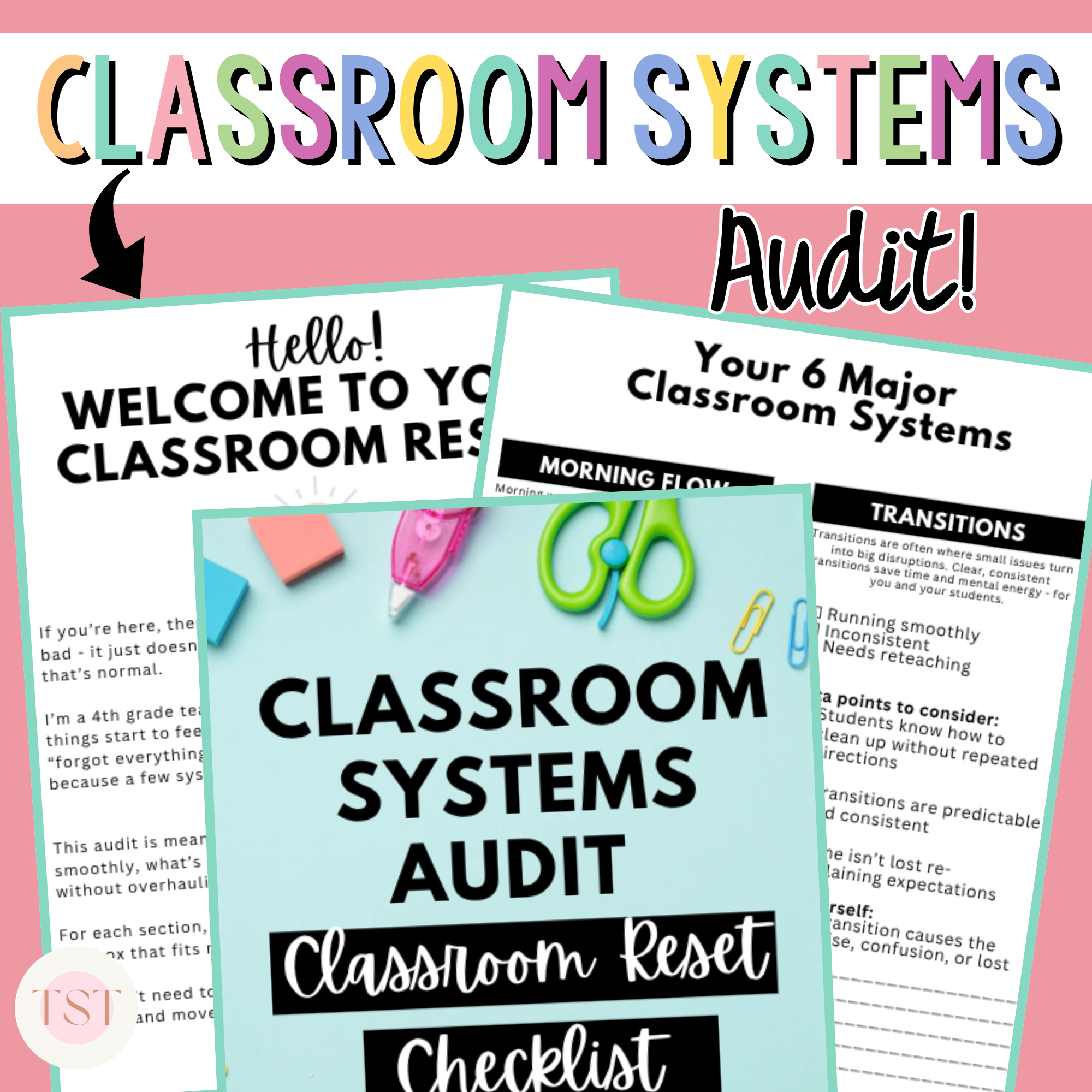
If you want a clear place to start without guessing what systems you need, I created a Classroom Systems Checklist that breaks everything down into manageable pieces.
It helps you:
identify which systems you already have
see what’s missing
build systems step-by-step without overwhelm
Simple Tools That Support Classroom Systems
You can find all of these and more on Amazon here 👉 Classroom Systems Organization That Works
The Goal Isn’t a Perfect Classroom - It’s a Predictable One
The most effective classrooms aren’t perfectly quiet or flawlessly run.
They’re predictable.
Students know:
what to do when they walk in
what’s expected during learning time
and what to do when they’re unsure
That predictability doesn’t come from more rules or stricter consequences, it comes from clear, simple classroom systems that run the day without constant reminders.
And the best part?
You don’t need to build every system at once.
Start small.
Build intentionally.
Let your systems do the heavy lifting.
